
Background & results
Material, receipt and outsourced-receipt labels were all hand-written — slow to produce and hard to read, so batch, bin and source were often misread and every item and quantity had to be re-confirmed at put-away, picking and stocktake.
Consolidated picking across several work orders had to be compiled by hand, every picking and staging document was written manually, and picking status and staging progress lived in no single up-to-date source.
Whether a work order was short had to be checked order by order or compared against stock by hand, shortages and replenishment needs were confirmed by asking other departments, and stock records drifted out of step.
Part numbers, names, specs, warehouses, bins and stock levels were scattered across ERP, Excel and hand-written warehouse records, making lookups slow and forcing extra time to confirm material availability before staging.
Purchasing, the warehouse and the shop floor shared no common platform — information moved on paper, in handwriting, by word of mouth or over chat apps, loading every department.
There was no continuous data flow from purchasing through receipt, put-away, picking and production to stock update — each step had to be compiled and confirmed by hand, costing time and accuracy.
SCOPE
Standard material labels generated from the part master and receipt data, QR-coded for put-away, picking and stocktake scanning
Multi-order picking consolidated automatically into an A sheet (summary) and B sheets (per work order), written back to ERP on confirmation
Look up orders by type or customer, adjust transfer quantities per item and generate the transfer note automatically
Instant lookup of name, spec, notes, warehouse, bin and stock level, with bilingual Chinese/Vietnamese field labels
Stop hand-writing labels — make them scannable
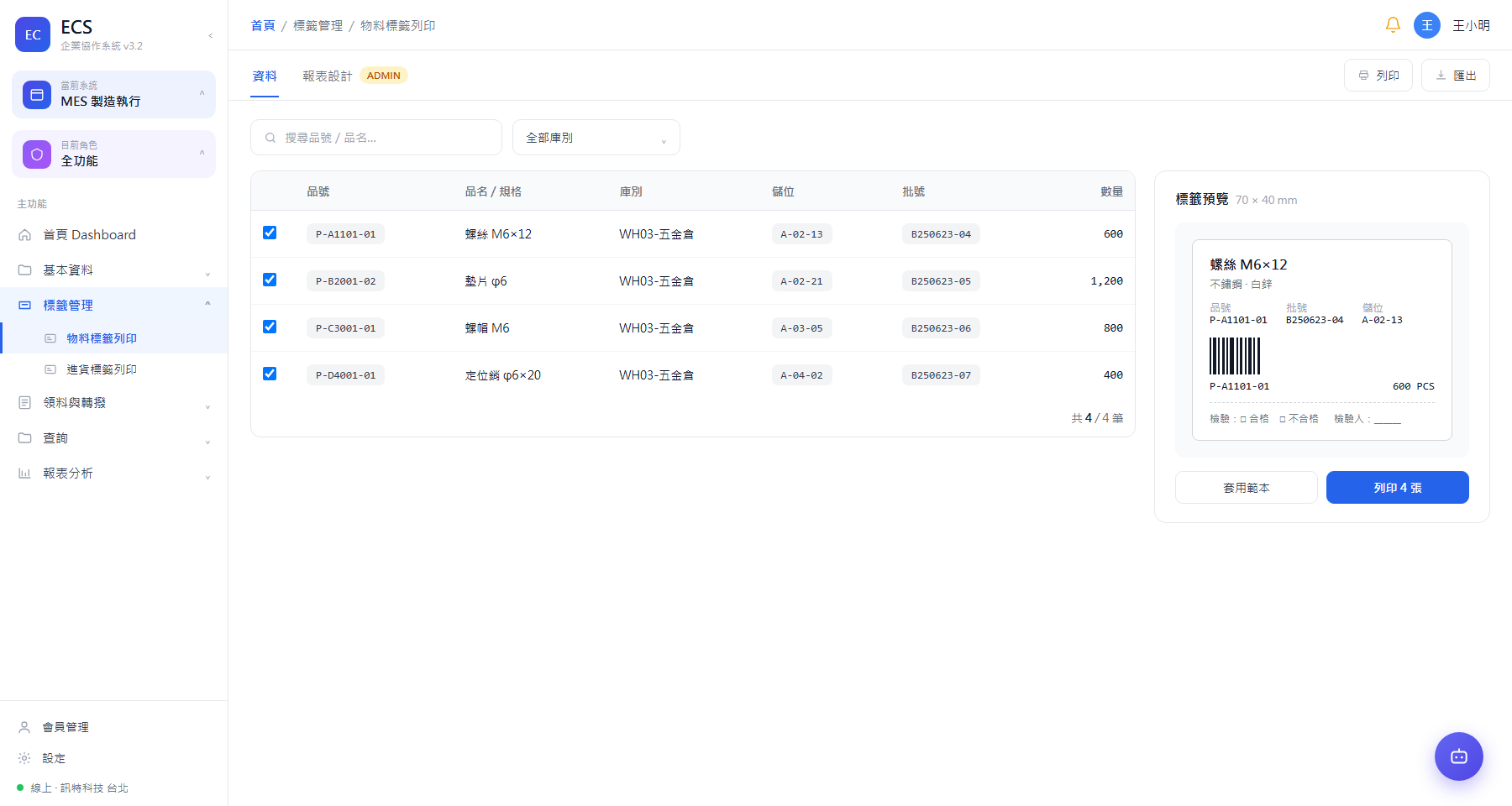
Standard material labels are generated automatically from the part master and receipt data; once a purchase or outsourced receipt is complete the system produces the labels for that batch — part number, name, spec, lot and bin — ready for barcode scanning at put-away, picking and stocktake.
Material label printing + receipt label (QR code and inspection fields)
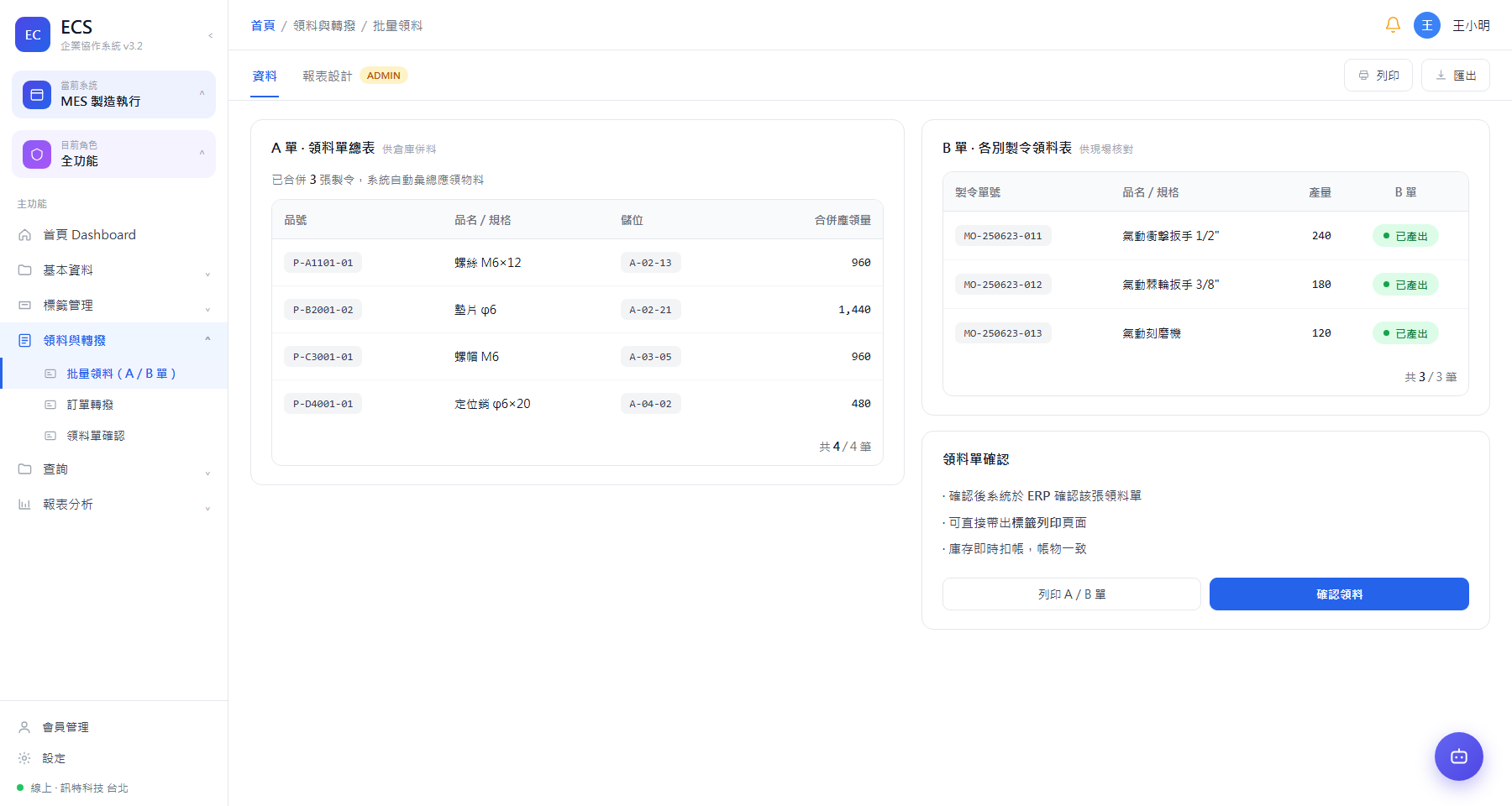
Pick several work orders at once, without piecing it together by hand
Picking can be consolidated across work orders: the system totals the material each one needs and produces an A sheet (the consolidated list the warehouse picks against) and B sheets (per work order, for the floor to check against). The confirmation screen opens label printing directly, and once labels are printed and the sheet confirmed, the system posts the confirmation back to ERP.
Consolidated picking sheet (A) + per-order picking sheet (B) + picking confirmation
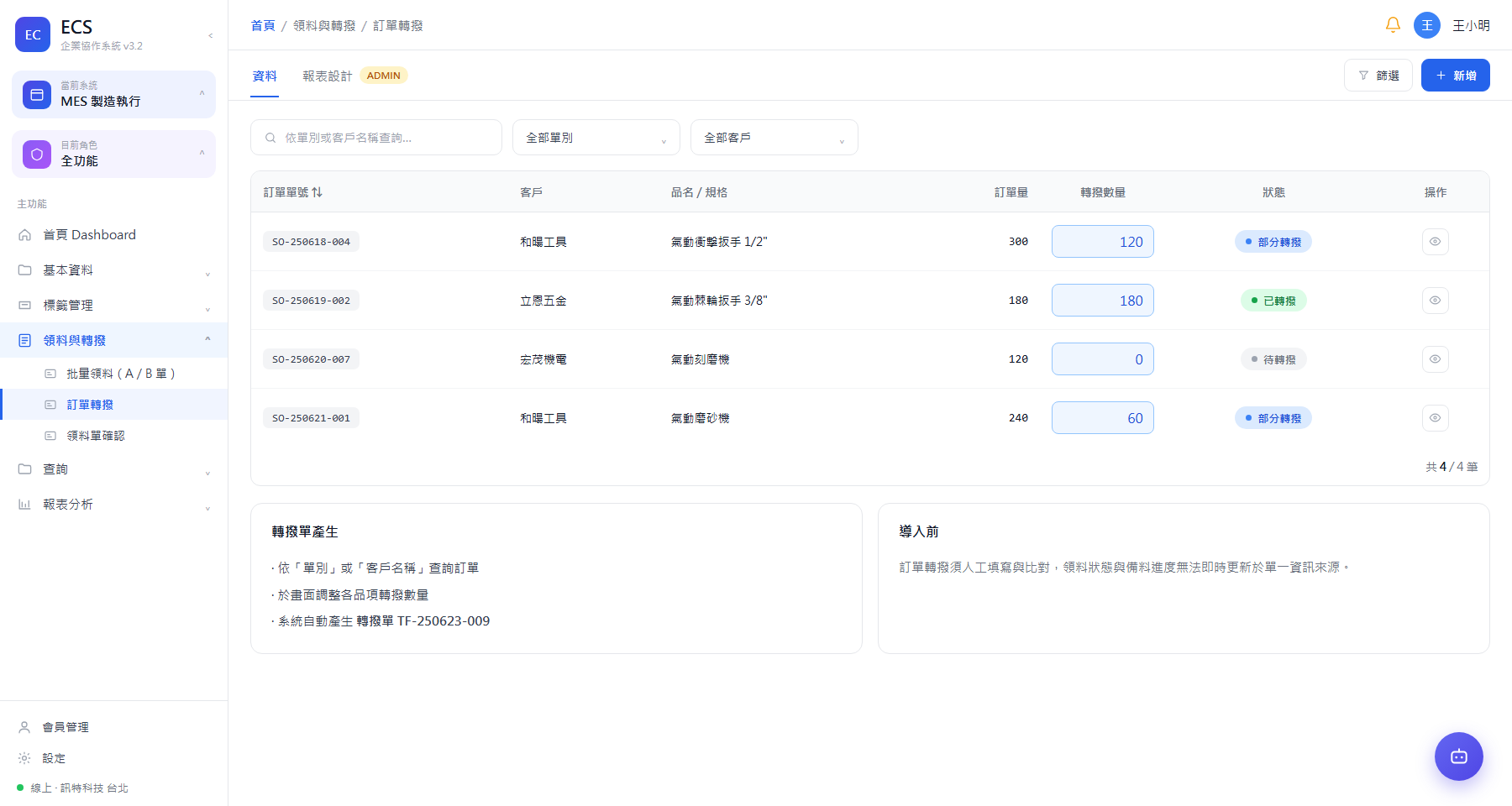
Stop writing and cross-checking transfer notes by hand
Users search orders by document type or customer name, the system lists the matches, and once one is selected the transfer quantity for each item can be adjusted on screen before the transfer note is generated automatically.
Transfer order lookup + quantity adjustment and note generation
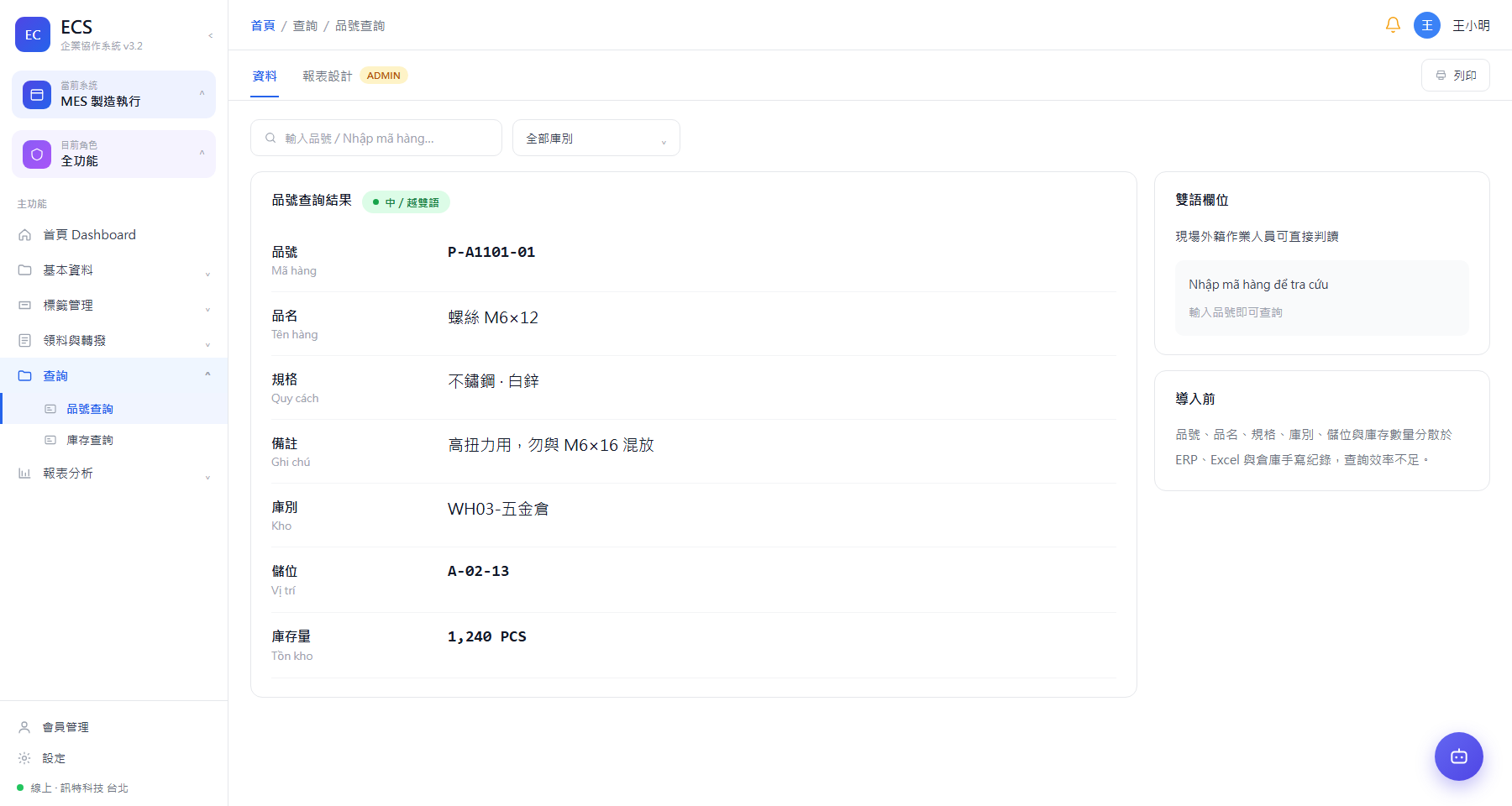
One part number — where it is and how much is left, instantly
Entering a part number immediately returns its name, spec, notes, warehouse, bin and stock level, with field labels in both Chinese and Vietnamese so migrant operators can work from the same screen.
Part lookup (Chinese / Vietnamese)
RESULTS
- Automated labelling, receipt confirmation, order transfer and consolidated picking cut the time spent filling in and checking documents line by line, freeing the floor to focus on production.
- MES takes the master and document data straight from ERP, so lot numbers, bins, picked quantities and transfers are system-controlled and current — no mis-picks, misplacements or missed entries.
- A single labelling, put-away, picking and transfer flow makes material movement traceable and visible, so the floor knows at once whether a job is fully staged — reducing both waiting and stock risk.
- Purchasing, the warehouse, the floor and management share live information through MES instead of paper and verbal confirmation, shortening handoffs and cutting communication cost.
- Faster staging, receipt confirmation, picking and transfer steady production and shipping times — better delivery performance builds customer trust and competitiveness.